
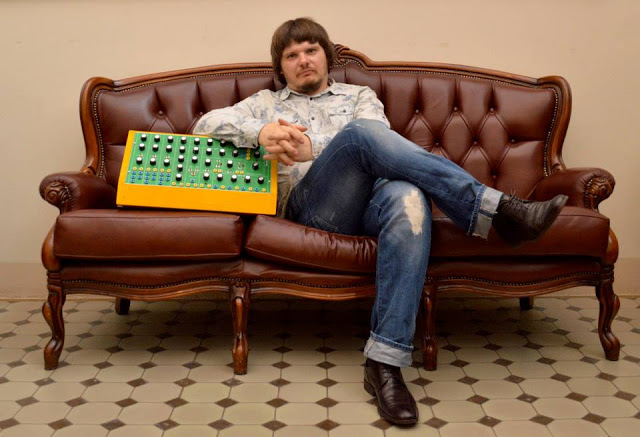
Greetings, Taavi! Tell us more about your project Galaktlan! What constitutes its main idea? What does its name mean? Is there any difference between it and the Uni music concept?
Hello! Galaktlan first started around 2000 as my side project alongside Uni, and it is my main project now. Actually, it was initially meant to be for only one performance at a special private party in an abandoned rocket base. But it was well received, and I had a lot of ideas to take it further, so the project continued.
Musically, there are similarities, of course, but initially Galaktlan was meant to be more experimental. And Uni was a duo, whereas Galaktlan is my solo project.
And as for the meaning of the name, back then I was thinking of a word to describe a citizen of the galaxy. Estonian, Martian, they are all Galaktlan.
As of now, in the month of March, you have published a new Uni album alongside Hendrik Luuk. Is it just a desire to publish some already recorded material, or can we hope for something brand new?
I had this 15-year-old material on my hard drive, and we thought it was better to share it before it was gone for good. It has already miraculously survived two hard disk crashes, and I was afraid it wouldn’t survive the next one. At the moment, there are no plans to record new material as Uni.
Do you associate your music with any specific genres, or do you want to be free of such labels?
I usually do not produce music with a specific genre in mind, but it still ends up in what people call IDM, ambient, or electronica.
As a musician, who is your inspiration?
Estonian composer Sven Grünberg was my childhood favourite. He is a renowned film music composer, and I remember recording movies from TV to tape just to listen to his music. Later, when I started with Galaktlan, I was a big fan of Arovane. And I am really glad he is now making music again.
What can you tell us about the current trends in ambient music? Are you impressed with the latest releases? Could you name any releases in particular?
I think ambient music lately has become more complex and layered. Also, as analog synths and modular systems have become prominent again, there’s a lot of new stuff recorded with them. Personally, I think it’s nice to listen to the same album again and discover something that you have previously missed. The latest releases I’ve bought include Purl & Sinius’ “Oceans of Sound,” Bvdub’s “Safety in a Number,” and I would also recommend another Estonian project called Tehnoloogiline Päike, which recently released its third album, “Technological Sun.”
Where on this planet would you like to do a live performance? (Could be a country, but could also be a place like the coast of the Atlantic, a bunker, etc.)
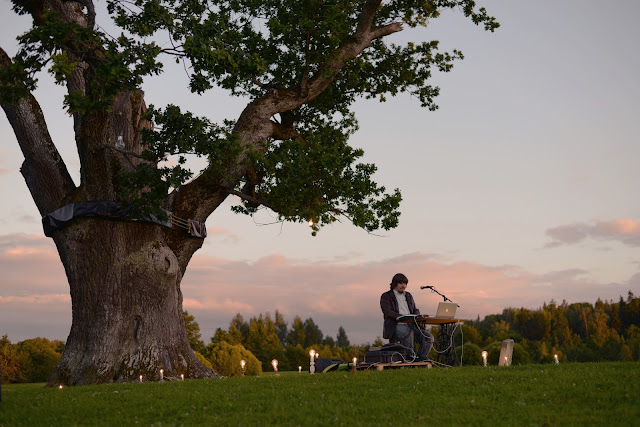
I have performed in various places around the world over the years, but I have always liked private parties in special places. Currently, I would prefer to work in my studio. But if all goes as planned, then this summer I will perform under the oldest tree in Estonia. I am sure performing under the oak tree that dates back to 1326 will be something to remember.
What is your main message to the audience?
I remember the emotion I felt when I was first introduced to experimental electronic music back in the early ’90s. Some music sounded so beautiful to me that I almost cried and thought, “Where have I been? Why have I not heard this before? Why do so few people seem to grasp its beauty?” I would like to offer my listeners the same sensation and emotion.
Are you planning on releasing a new Galaktlan album? Have you begun working on it?
I do have quite a lot of unreleased tracks, but I don’t have a concept for a new Galaktlan album yet. But I am collaborating with another Estonian artist called Kroma.
As we all know, the Estonian music scene has been known for its talented musicians. How are things going now? What genres of experimental electronic music are particularly prominent?
In the ’90s, I probably knew all the electronic musicians in Estonia personally. Now, the scene is quite big, and many artists are also releasing music on foreign labels. These are definitely good times for Estonian electronic music. It’s been said that the Estonian music festival Tallinn Music Week, which also hosts a lot of local artists, is one of the most important music events in Europe. There are developments in almost every genre.
Who would you like to perform with?
I would really love to share the stage and backstage with legends like Boards of Canada or Aphex Twin at least once. Have a little chat, have a couple of beers with them. Back in the ’90s, we sent a letter to Boards of Canada and asked them to join us for a sauna in the wilderness of Estonia, but, as expected, there was no answer (laughs).
What is your opinion on contemporary art? Do you have any favorite artists in this field?
My wife studied jewelry design, and she occasionally also paints, though only for herself. But she is my favorite artist, of course (laughs).
Do you think it is necessary to have visuals at events, or should music be perceived independently, through human consciousness?
I think visuals are also important. Although music can speak for itself, visuals can help open new channels and allow you to go deeper.
Do you support the free distribution of music?
Only if the artist has decided to give it away for free. I do not make music for money, but paying for music you really like is an act of respect that every musician appreciates.
Do you have children? Do you try to develop their musical taste?
I have two children, and they are still very small. But I already play my synths together with them, and my wife is teaching them to paint. I think it’s very important to introduce children to creative skills, even if they don’t become artists.
Is your music an avant-garde or underground phenomenon, or would you say your work might be understood by the masses? What is your opinion on this?
I have noticed that there are a lot of people who find instrumental music difficult to understand. If they could only break through this barrier, they would discover a whole new world of music. Galaktlan could also be part of that new world.
Can you share any information about Hendrik Luuk? What is he busy with at the moment?
He is raising his son and occasionally performs with his other project, Popidiot. We are still good friends.
Tell us about your guest material. What have you specially prepared for our podcast?
All the tracks are studio live recordings performed for the Data.Wave podcast. The tracks sound different from the original versions, and there is also a bunch of unreleased material.
Would you like to say anything to the Data.Wave audience?
Please enjoy the show and support the artists you like.
Questions: Ilya Kudrin