Greetings, Esa! Tell us, what tied you to the world of music and then to electronica specifically! What artists in particular have had an influence on you?
I basically grew up on computer sounds. My dad soldered together a computer from a DIY kit, and the first sounds I can actually remember are those of a cassette tape loading a program. Maybe it was a game, and that sound was piped into a speaker. We had a spherical speaker, and I believe those are the first kinds of sounds that I can remember: the sound of data being loaded into a computer from a tape.
I’m not actually aware of whether it was ever really popular to wire up a speaker to a tape machine. I never asked my dad why he did it, but apparently he was interested in what it sounded like, or maybe the speaker just happened to be around, and he wanted to know if the machine he had soldered together actually worked, or if he could actually hear the sound from the tape.
Those were the first kinds of things I heard. Basically, having gone through fifteen to twenty different computers from around 1980 onwards, I was really familiar with the bleepy-bloopy sounds that the games would make.
I would also listen to Finnish national radio. We had a few shows, and there was one called Avaruusromua (Finnish for “Space Debris”), where people would play synthesizer-based music, found sound, ambient, drones, experimental music, and maybe musique concrète. I would hear Kraftwerk and Tangerine Dream there. While I was listening to computer music, music made with computers for games or demos on the demoscene, I would also get into checking out some of the music composition programs for the C64 and the Atari 8-bit. Basically, I grew up on this very simplistic diet of Vangelis, Jean-Michel Jarre, maybe Kitaro, Synthesizer Greatest CDs, and just a tiny amount of contemporary popular music.
I would say that the artist who influenced me the most would probably be Aphex Twin. I bought his On CD in 1994 or 1995, and I just had to get everything. Before that, I would have been listening to something like The Orb or Orbital, but once I heard Aphex, once I realized that all the good stuff I had actually liked, that people had made on the demoscene, was directly influenced by Aphex, I tried to collect everything I could by him. He is still a major influence, not necessarily in terms of speed, velocity, and harshness, but just in terms of melodic taste and a flair for communicating emotion. I obviously always liked his really aggressive stuff, but I never got into making that kind of thing myself.
Maybe Global Communication, and Seefeel as well. I remember that I bought their EP called Pure.Impure because it had two Aphex mixes on it, but once I heard the Seefeel sound, it was really inspiring and moody.
Tell us about your plans for the project this year!
I am going to be rebuilding a DOS PC in order to run Impulse Tracker on it. After all, that’s always been my favourite music composition tool, because you can’t really add many effects or process stuff with it, so you’re stuck with composing actual notes, running, using the sounds that you have. I haven’t had a DOS PC running for about, let’s say, four or five years, and I’m really missing it.
Since then, I have mostly been messing around with Renoise, Ableton Live, and Logic. They have movable windows and all kinds of effects. You can add anything anywhere and do anything, but I find that this is not conducive to making music. I like a static grid, three view modes, and no movable windows or frames. I’m really looking forward to that, and I have high hopes that it will be really inspirational and get me back on track, helping me win the endless battle against having a lot of tabs open in a browser and distracting myself with social media.
I’ve been contacting some festivals, getting in touch with them, and also sending them some live gig recordings. We’ll see if any of that pans out. I’ve already played a couple of gigs this year. Let’s hope I can get a gig every couple of months, or even every couple of weeks. That would be splendid.
So, the other thing is becoming more knowledgeable about a red box that I have, a tiny red box, and patching more patches with it. I’m thinking of buying some new bits of gear. They will be electromagnetic field recording devices and very low-frequency field recording devices.
For this year, I’m waiting for a remix I did for the Russian musician Sapphirine Phlant last year to come out. There’s also this mix that a fan made of my really early work, something I just mentioned in the previous answer, and we’re going to try to release it because it’s kind of like historical Lackluster material. Some people might really like it, while others might just think it’s quaint.
I’m supposed to be composing a demo for a specific label, so we’ll see what happens. I’m obviously also practicing for future gigs, and let’s see if there’s any time and space to actually do art installations.
Which labels do you think are the most relevant and noteworthy at the moment?
I don’t really know. I don’t know how to answer that question, because if you had asked me about it a decade, a decade and a half, or two decades ago, it would have been really simple to answer. My answer would have been Warp, Rephlex, maybe Sähkö, but I have no answer to that question now.
It mostly goes like this: I follow specific smaller labels, not even specific smaller labels, but specific artists, and I like their stuff. I try to be comprehensive in collecting what they produce. I think, let’s say, something like Stones Throw is interesting to me. I checked out that documentary called Our Vinyl Weighs a Ton, and I liked it. I liked their attitude, and it’s sweet that they’re still producing vinyl.
Obviously, vinyl is a bit more popular than it was maybe a while ago, but from a viewpoint, or from a kind of conceptual point of view, I think Stones Throw is pretty neat. I still like bits of Warp, but I’m also just checking out whether there’s anything new from Autechre, Aphex, Flying Lotus, like the old, old people. I have no idea what the new stuff is like, the new artists, the new signings. I don’t really know. I haven’t checked that out.
I don’t really listen to any of the Brainfeeder stuff, but I was surprised to see that they released that Kamasi Washington record, like a double LP of full-on jazz recordings. Some of them were ten to fifteen minutes long, and a friend turned me on to it. I thought, like, if Brainfeeder is releasing stuff by Thundercat, produced by Flying Lotus, and Kamasi Washington, then I’m gonna pay attention. I checked out a Thundercat gig in Helsinki, and it was plenty enjoyable.
Do you have a favorite track that you could listen to an infinite amount of times?
This question is a bit vague. I don’t really know if I’m supposed to talk about my own music because, when I’m making it, I end up listening to it tens or even hundreds of times, especially if I’m making tiny, minute changes or tweaking the mix.
One thing that has really stuck with me and truly stood the test of time is Aphex Twin’s Selected Ambient Works Volume II. It’s just as refreshing now as it was when I first heard it. It’s still as nightmarish, bright, and dark as it was back then.
There’s also a tiny little interlude by Richard called “Untitled 17”. My girlfriend and I actually use it as our alarm tone, so we wake up to an Aphex Twin track every morning. It’s lullaby-like and really pleasant, and it’s much better at waking you up gently than pretty much anything else.
I like listening to music like that, but the thing is, I listen to so little new music that, whenever I come across a track I really like, I usually know within the first ten or fifteen seconds. Then I’ll just listen to it endlessly until I wear it out.
I’ll hear a song I really like, and then I’ll just keep repeating it endlessly until I know it inside and out. By that point, I’m kind of sick of it, but it’ll still come up on one of my playlists every once in a while.
The thing is, when it comes to new favorite tracks, I sometimes discover something through Apple’s Beats 1, which is interesting because I didn’t expect it to work so well. One track I’ve been playing a great deal recently is Jamie Lidell’s “Pink Light.”
Actually, if you’re interested in the kinds of things I’ve been playing a lot recently, you should check out my Sunday Morning podcast for DJ Danny Daze. It’s fairly eclectic, and hardly any of it is truly electronic. There’s a bunch of Flying Lotus, José James, some Tom Misch, and all sorts of other things. My friend, who’s a purist and only listens to ambient and electronic music, said, “Yeah, it’s a nice mix, but there’s so much R&B and soul in there.”
And I’m thinking, like,“Well, there’s music with vocals in there, but it’s not, you know, it wasn’t supposed to be Autechre’s greatest hits or something like that. It was just supposed to be something you listen to on a Sunday morning, when you’re winding down after a gig, or when you just want to relax.”
I’m more into albums, actually, and some albums really stand the test of time. The thing is, my listening tastes have changed a bit, so if you had asked me this around 1996 or 1997, I would have said Aphex Twin’s I Care Because You Do. I would’ve said Squarepusher’s Hard Normal Daddy, maybe LP5 by Autechre, Two Lone Swordsmen, which I listened to endlessly on repeat, and the Boards of Canada album on Warp.
Nowadays, it’s more like I’ll come across some of that music and listen to it for a while, but I’m not really that into it anymore. I really loved Arovane’s Tides, for example, but I completely wore it out, and then I kind of rediscovered it and realized it’s not actually that deep, not as deep as Atol Scrap, for instance.
The main issue is that I don’t actually listen to music that much anymore. That’s why I kind of tune in to Beats 1 to hear some new stuff, and it’s been interesting.
What are your hobbies besides music?
I still read books, all sorts of books. I’m currently reading this book by Ed Catmull called Creativity, Inc. It’s about the story of Pixar Animation Studios, and I’m a big fan of Pixar movies. The other book, right next to it, is Richard Feynman’s Surely You’re Joking, Mr. Feynman!, and I’m really looking forward to starting it, as I seem to be a big fan of his stories.
In addition to that, for the past twelve years I’ve been interested in Free Energy, as well as all the various inventors associated with it. I was kind of an archivist. I’ve digitized old books, old documentaries, and old articles and made them available online. If you actually Google my name, you’ll come across various articles that I’ve rescued from oblivion, as well as some pictures.
I’ve visited the Nikola Tesla Museum, the Viktor Schauberger Museum, and an Earthship, as well as a couple of Free Energy conventions, and I’m looking forward to visiting others. I’ve developed a kind of fanaticism about Nikola Tesla and other inventors and discoverers, such as Walter Russell, John Bedini, Stanley Meyer, John Keely, Ed Leedskalnin, and Karl Schappeller.
I have yet to build anything myself, and my interest kind of ebbs and flows. Sometimes it’s right there, and I’ll spend a few days looking into various things, maybe writing a little review or report, going a bit deeper, or even writing a small article. Other times, I’ll just wear a T-shirt and forget about the whole thing. For instance, I have a bunch of T-shirts from the Energy From The Vacuum DVD Science Series, Steorn Orbo from Ireland, and the Wilhelm Reich Museum in Rangeley, Maine. Visiting the museum is still on my bucket list.
Obviously, I am really looking forward to visiting Coral Castle in Miami and seeing what it’s like, even though apparently there’s hardly anything left of it.
I was really into what Richard Buckminster Fuller was writing, but I was turned off when I tried to watch documentaries about his life and work or listen to any of his talks. I have tinnitus and hyperacusis, so it really grates on my nerves to hear someone yammering on and on for hours without there being a transcript. Especially since I don’t currently have any software to process the audio before listening to it. I used to have that kind of thing on a Windows PC, but I don’t really know how to do it on macOS.
I mean, obviously, when it comes to Free Energy, sustainable energy, sustainable living, alternative energy, and that kind of thing, I would be interested in what Tesla Motors is doing. We’ve gone and checked out the Tesla Model S a couple of times and taken it for a test drive. I’m looking forward to checking out the Tesla Model X. I don’t know if these are really interesting hobbies, but there you go.
I’m an Apple fan, I’d say. I’m interested in checking out their patents and seeing what might be coming next, and I sometimes even write a small blog post about what I think is coming. I like to see how they develop things, what happens, and what kind of influence they have. All my stuff is on Apple Music, as well as Spotify and Tidal, but that’s kind of beside the point.
I’m also kind of interested in social media marketing, but that’s been on the back burner, especially when it comes to Lackluster, so I’m not promoting it that much.
Yeah, as far as hobbies go, I’d say things like alternative medicine, meditation, and esotericism, but also movies and animation. I’ve got quite a queue on Netflix.
I would currently say that one of my hobbies is making music. I used to make music every day, so we’ll see what happens this spring.
Which music software do you use?
For live gigs, I mostly use Ableton Live, sometimes mixing it up with Renoise in ReWire mode. But I mostly compose with Renoise, Ableton Live, Logic Pro X, and sometimes Audiomulch, as well as other applications. The majority of the tracks I’ve done and released recently were made with Renoise.
I wouldn’t say that I actually endorse Renoise or that I’m sponsored by them, but I do like it and mess around with it quite a bit. It’s refreshing, but I’m hoping that in the future I’ll go back to Impulse Tracker, as I mentioned, and Ableton Live. I’ve been playing live gigs for the past thirteen years, so I think I’m going to stick with Ableton Live for my performances. It does everything I need it to do, and if I need to prepare something in addition to it, I can always just tag it in, place it in, or plug it in easily. So, at least for me, it’s pretty much the perfect solution.
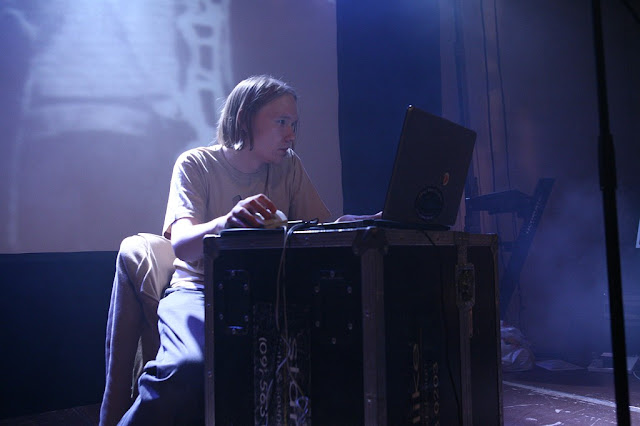
As we all know, you spend a lot of time touring around the world. Have you had a particularly memorable performance? Is there any country you would especially like to visit?
I hate to sound like a broken record, but I really liked my debut gig in Dublin, Ireland, in 2003. I was the second headliner there, and the other acts were Felix Kubin, Colleen, and Wevie Stonder. It was just so unique to play at a festival near an Irish castle. It was my first trip to Ireland, and the crowd seemed really up for it. The next few gigs in Dublin were inspiring too. I really liked the atmosphere and the people. They just seemed ready to feel the music and respond to it. Some of them danced, and it was just inspiring and somewhat exciting too, so I really liked that.
Obviously, I like it when, even though I’m staring at the screen, I can still feel that the audience is paying attention. Sometimes, when I’m staring at the screen, improvising and guiding the gig, I get so busy that I don’t actually see or look at the audience. So I don’t know if they’re enjoying it or not, or if most of them are moving or something. If it were more of a dance floor situation, it would be easier to realize that something is happening, something I can see out of the corner of my eye.
When it comes to which countries I would like to visit, that’s a difficult question. Let’s say I’d like to play in Scotland or Australia, Japan, the USA, Canada, Switzerland, and a few gigs in Russia. Maybe the Czech Republic, Denmark, and Sweden again.
But if you get there and there’s no one there, no one has even heard about the gig, no one is coming, and people are just standing around scratching their chins and paying a lot of attention, analyzing the gig, then it doesn’t matter what kind of place you’re playing in or what country you’re in. It’s the same kind of cold, harsh analysis: “What is he doing? Is it interesting to me on a rational, logical level? Is this complex enough? What is he actually doing? What about the controllers? Are they good enough controllers? Am I impressed by this on a technical level?”
If there are people like that there, it doesn’t really matter where I’m playing, because it’s the same kind of vibe. There’s just a bunch of people there to judge.
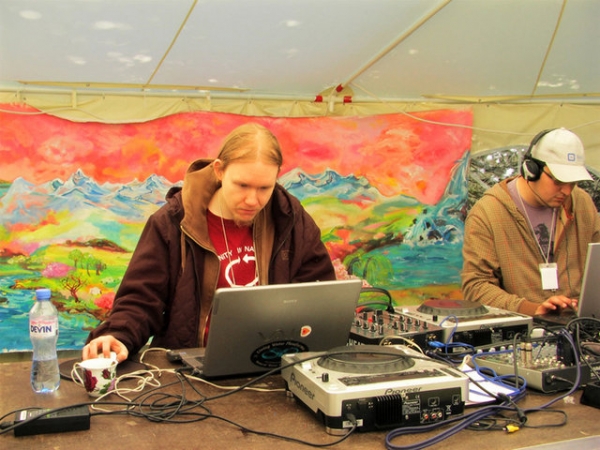
It really depends on the ambience and the kind of place I’m playing in. Like, what is it for? Is it a four-to-the-floor, danceable techno set, or is it more of a listening set? Is it a little bit of everything? Is it like a café, where people are talking all over the music, or are they actually there to listen to it?
Obviously, I’d like to play in every single country in the world. I’ve only played in Russia twice, and I’ve never been to Denmark. We’ll see. There’s always someone promising a gig in Poland or maybe the Czech Republic.
Nowadays, many people think that IDM is no longer relevant. What do you think about this?
If we’re talking about the so-called IDM from the mid-’90s through the beginning of the 2000s, you could easily say that that particular era of sound is slightly gone. What’s interesting is that a lot of the people who were making that kind of music back then have moved on, and some of them are doing completely different genres now.
I think the best two examples are Phaeleh and Machinedrum. From my point of view, the first record I heard from Phaeleh, the original record I heard, was released under a different name. I think it’s in my EggBox 01 podcast mix.
He was doing this kind of ’97-ish, Plaid-type stuff, something that wouldn’t have sounded out of place on, say, Plaid’s albums Not for Threes or Rest Proof Clockwork. It was a very traditional British, Plaid-type sound, if we have to call it something so that you’d be able to recognize it, even if you don’t know what it’s called. I think he was releasing music as Preston, and maybe the name of the track was “Time.”
Anyway, I was listening to that, and the interesting thing was that, obviously, I came across Phaeleh a bit later. I came across his collaborations with Soundmouse, when he was doing this kind of lovestep, chillstep, dubstep thing, but really deep dubstep, not brostep. So I got into the Phaeleh sound, and then it occurred to me, or I was somehow informed, that he had made a previous album. The thing was that it had the same sonic aesthetic as the Phaeleh stuff and the Preston stuff. It even had some of the same sounds.
But Preston was definitely IDM. It wore the badge on its sleeve, so to speak. It was very IDM-ish, it was of that era, but Phaeleh still had that kind of aesthetic, while the beats had changed. It was more for the dance floor, it was a newer sound, so to speak. To me, that’s an example of someone who was making IDM from the mid-’90s into the 2000s, inspired by Warp, IDM, and other IDM artists, and then moved on to what they like now. Now he’s doing lovestep, this kind of dubstep and chillstep thing, and it makes sense.
You grow all the time. You can’t just keep making the same thing over and over again. Let’s take Machinedrum, for instance. He was releasing music on Merck, doing this kind of glitched-up hip-hop with some IDM influences, and then he kept moving forward. I bought his album Room(s), released on Planet Mu, and he had taken his sense of melody, harmony, and that kind of thing, along with the grooves and everything else, and updated the beats. He moved into this kind of lovestep, dubstep, chillstep, halfstep area.
So I feel like when you call an artist an IDM artist, you might be labeling them or boxing them in a little bit. You might think they’re always going to sound like ’90s or early-2000s Warp Records, with glitched-up beats and melodies and a ton of reverb, but people actually change. That’s something you should really appreciate and accept, especially if you claim to be a fan of them. (chuckles)
I feel like there’s a lot of music out there, even popular music, that has some elements of IDM or some influence from that scene. Not necessarily in the sense of, “Okay, this pop song sounds like Aphex Twin.” It could also be related to software, synthesizers, and gear. There was a time when people started developing specific kinds of interfaces and features, like drum machines that made it easier to repeat a drum pattern or drum sound and create these really quick trills and things like that. The same thing happened with mobile phone games and 8-bit games. All of that has kind of fed into and filtered through the current state of things.
So if I listen to something like Beats 1, and it’s the newest popular stuff, some of it has its roots in people probably listening to IDM, electronic music, experimental music, Warp Records, and things like that, but it might not have anything to do with IDM at all.
So I feel like I wouldn’t say that I’m making IDM music. I don’t think I’m doing that because it’s such a restrictive label. I don’t feel like I ever really made IDM. I made something, and I liked it.
I feel like the label IDM doesn’t really mean anything anymore. If you’re sitting around going, “Well, I’m an IDM musician,” and it’s 2016, either you’re really pushing the genre forward, which I find hard to believe, or you’re just using a label that doesn’t really describe what you’re doing anymore. You don’t have to push it anymore. You don’t have to try to go to the outer limits of music. Now, obviously, you can do that if you like, if you’re Autechre or Richard Devine, but if you feel like doing something that’s more like the kind of music you actually want to listen to, then go for it.
I hope I never got trapped into thinking that I’m making IDM. I hope I always got trapped into thinking that I’m making melodic music that I like.
I don’t know about IDM having outlived its usefulness, but it doesn’t mean what it used to mean back then. If it’s being used to describe your music, then you should take a long, hard look at what you’re doing and whether it’s really what you want to be doing, or if it’s just something you’re doing out of habit.
I know there are a lot of people who hate that term. I don’t mind it. If you call me IDM, I don’t care. It doesn’t matter to me. Just listen to the music. If you recognize influences from electronic music, experimental music, IDM, ’90s-era Warp Records, or whatever, sure, okay, let’s go with that.
Could you give any advice to aspiring electronic musicians who want to work within the field of experimental music?
The most important thing is to just keep making a lot of music, a lot of tracks, a lot of sounds. Never get stuck trying to sound like someone else. Just develop your own tastes, develop your own sound, and do what you like. Try doing as many diverse things as you like at the start, or just keep experimenting, testing, and checking out new things. If you hear something that sounds interesting, try to do something like it, or create something influenced by it. Just make music.
If you were to make hundreds of tracks, or even loops, thousands of loops per year for a couple of years, or even a couple of months, finish some of them, finish all of them, finish none of them. Just start as often as you can and get stuck in the middle as rarely as you can.
Don’t spend three weeks fixing a track that doesn’t feel like it’s going anywhere. Don’t waste time. Just make new stuff all the time. The faster you start working on something new, the further you’ll be able to develop your skills as a producer.
When you’re basically in learning mode, don’t worry about what you don’t know. Just do what feels right, what feels good, and embrace all the possible happy accidents that could ever happen.
From my point of view, never get rid of any samples, loops, beats, or melodies that you’ve created. They might speak to you in a different language later on, maybe a decade from now or five years from now. You’ll discover that that specific thing you sampled, which didn’t seem to make any sense at the time, actually sounds amazing on top of something you’ve created just now.
Just keep making stuff. Don’t compare yourself to other people, especially if you have friends who are making music too. It’s your own race. You’re just trying to better yourself, so keep making tunes.
Don’t ever get hung up on other people’s comments or any kind of commentary. Don’t make a 20-second loop, give it to 50 people, and ask them for their opinions. During the time you’re waiting for them to say, “It’s nice,” “It’s okay,” or give you some other one-sentence response, you could have made 50 more loops.
Whatever you’re doing right now, or the next thing, or the tenth or thousandth track after it, is going to be better, hopefully. Get into a process and a routine of making at least a couple of things every day, or as many as you can, because nowadays it’s possible to make anything with anything. You have access to all kinds of software and tools. Just have a lot of fun, be productive, and never get hung up on what anyone else is doing.
Is there something that inspires you to make music?
Basically, for me, the most inspirational thing is trying out new sounds and trying out new methods. But I think the overall, underlying thread that I’ve always had is that when you hear something, when you have something playing, it dictates the direction you’re going in and pulls you into a specific place.
Let’s say it’s kind of like I’m sending a ping to the software or the synthesizer, and the synthesizer pings back or the software responds. I get influenced by that, and then it’s like a continuous feedback loop, a communication between me and what I’m crafting. At the same time, the thing I’m crafting is crafting me. So basically, you’re rewiring your brain to reach a different kind of state, a certain mood, or an emotional state.
You get inspired by sound. You might get inspired by hearing a song that sounds just about right, but you would have done it differently. Maybe it’s just a place, or maybe it’s just a sound outside that you happen to record and then use. Very simplistic things.
I get influenced by sound. That’s about it.
Tell us more about the experimental music scene in Finland. What genres are particularly prominent?
I think you should check out this documentary called Machine Soul.
Which members of the Finnish experimental music scene would you strongly recommend listening to?
Brothomstates and Blamstrain.
Who would you like to perform with?
Well, for me, performing together would mean collaborating and playing live together. I’ve never actually performed live with anyone, so it would require some preparation and getting in touch with someone well before actually doing a gig.
I don’t know. The closest I’ve come to working with anyone is having someone send me some samples or loops, or someone lending me a synthesizer. I’m kind of a lone wolf when it comes to this kind of thing.
I’ll let you know if that changes, when I actually start collaborating or working with someone. But never say never. There’s no one in particular I’d especially like to work with, but that could change. It’s not a door I’ve opened so far. Maybe I’ll open it this year. It could be interesting. We’ll see.
Could you tell us about the live improvisation you specially prepared for our Data.Wave podcast?
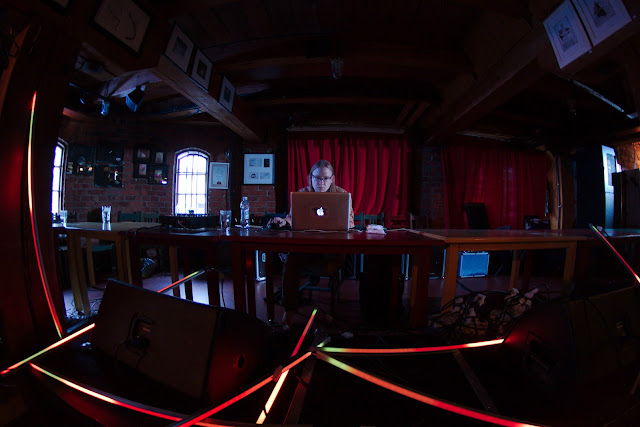
This is a live improvised set. I think what I’m going to do is pick a bunch of tracks, a few very specific tracks from older Lackluster material, and rework them or kind of re-treat them in the way I do at my gigs.
I recently got a report from Rumblefish, which is one of those monitoring services that pays royalties for YouTube plays, so I’ll check out the Rumblefish report and see which tracks have been played the most. I already know that “Starcell UK” and “So Short” have been used the most in YouTube videos, so I’m going to try working with those.
Basically, I’ll approach the live recording using the same methods and styles that I use when I play live. It’ll be made up of stems from tracks, parts of tracks, parts of parts, maybe individual drum parts. I’m going to spend maybe an hour or two preparing each track, and then get going. Let’s see if I can tease out something fresh and new from them, or show them in a different light, at a different pitch.
Is there anything you’d like to say to our audience to finish the interview?
I’d like to wish everyone good health, good moods, and less depression.